Tasmanian Thipsels
A research blog
Chronological list of posts
Alerts for new posts: 
Caving and thipsel-ing
Deb Hunter of Caveside Caving had been seeing millipedes in the dark zone of Sassafras Cave (Mole Creek Karst National Park) for years. An image she sent me seemed to show the common North West dalodesmid Lissodesmus perporosus. To be certain, I joined Deb and two guests today in an exploration of the cave.
We found both Lissodesmus perporosus and a Gasterogramma species, either G. psi or G. rusticum (I didn't see a male). All three species are common in forest in the Mole Creek karst area, and the cave specimens were fully coloured and with normal (not skinny) body and legs. They probably either walked into the cave or got washed in during a flood event.
L. perporosus has also been found in other Tasmanian caves within its range. The only time I've seen it looking a bit pale and "troggy" was in karst at the Trowutta Arch (down in the sinkhole). To date only three Tasmanian native millipedes are known to be troglobitic: Noteremus infimus from the Junee-Florentine karst, Atalopharetra clarkei from the Ida Bay karst and A. eberhardi from caves near Precipitous Bluff.
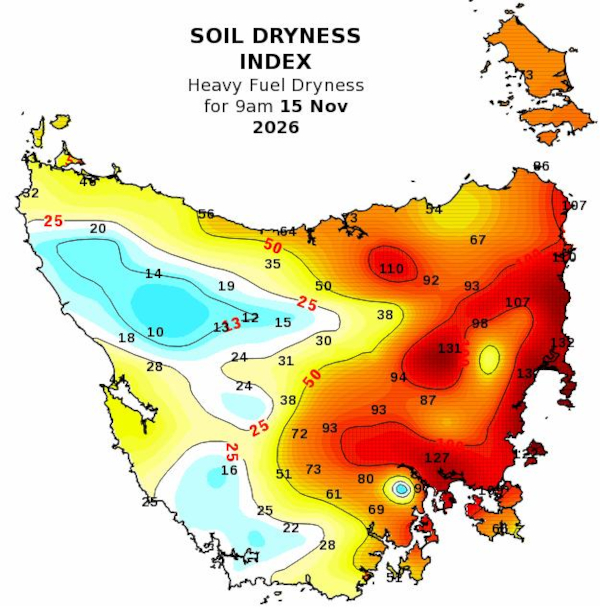
On my way home I looked for thipsels in shady Olearia argophylla/Pomaderris apetala stands along the Mersey Forest Road. The leaf litter crackled underfoot, as it does in a dry summer, and the only thipsels I saw were Paredrodesmus and Procophorella in moist depressions in the forest floor. (No males again, so not ID'ed to species.) Tasmania continues to dry out this Spring (see below; see this thipsel post for an explanation of the map).
2026-11-15