Tasmanian Thipsels
A research blog
Chronological list of posts
Alerts for new posts: 
The Spring thipsel outlook is bleak
When and where Tasmanian millipedes can be found as adults varies a lot, but for almost all dalodesmid thipsels the key determinant is soil moisture.
If there's been enough rain, the soil and the leaf litter above it is damp, and adult thipsels are surface-active and findable. If there's been a long rain-free period, adult thipsels descend into moist soil voids, out of sight and "absent".
In Tasmania this simple relationship is independent of district or time of year. For this reason I plan my millipede hunts based on local rainfall figures over the past several months. Areas that have had good rainfalls over the preceding 6-8 weeks are prospective for thipsels and other leaf litter millipedes, whether that's near Bicheno or near Zeehan, and whether that's in July or January.
I get rainfall data from the Bureau of Meteorology's "Climate Data Online" map series, but in my experience an even better picture is given by the Soil Dryness Index map released daily by the Tasmania Fire Service:
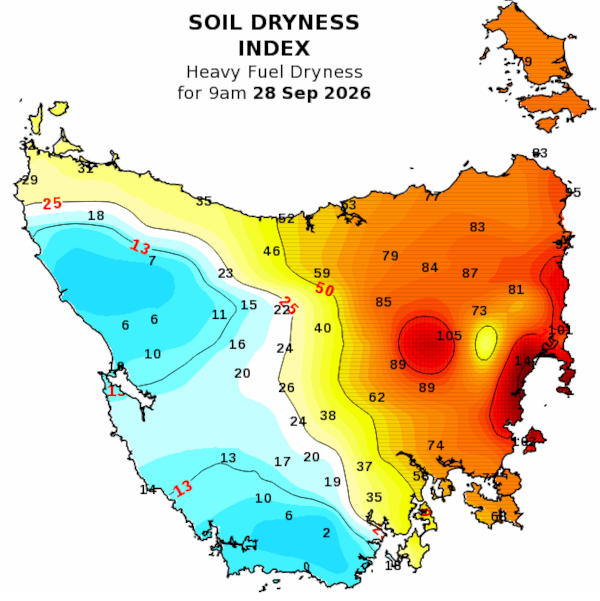
Image from the Tasmania Fire Service website.
The numbers and colour scale on the SDI map estimate the mm of rain required to saturate the soil, up to a bone-dry 200 mm. For the past few years the SDI map has shown two strikingly different Tasmanias: a wet west and a very dry east. There isn't much point in searching for thipsels in an area with an SDI over 100. They might be found by digging in gullies and other topographically wet places, but the return would be unlikely to justify the effort.
[Note that the dry-East pattern isn't permanent. Lots of thipsels have been collected in dry eastern forests during wet periods, as shown on the Tasmanian Millipedes thipsel map.]
This Spring's weather is likely to be warm and dry in Tasmania, although El Niño may bring heavy easterly rain to the East Coast in Spring and Summer. What I've noticed in recent weeks is that the Northwest is drying out fairly quickly.
Yesterday I sampled in forest by the Leven River at the southern end of Gunns Plains (in the yellow ribbon in the map above). Leaf litter in the shade was mainly dry even at the soil surface, and moist only in small depressions in the forest floor. I didn't find thipsels other than Asphalidesmus leae, which were inside wet rotting logs, and Paredrodesmus taurulus, which were burrowing shallowly below the dry leaf litter layer in moist soil.
Unless there's substantial rainfall in the next few weeks, my thipsel hunts this Spring will be restricted to the central West Coast, targetting the rarely collected M1 and M19.
2026-09-29