Tasmanian Thipsels
A research blog
Chronological list of posts
Alerts for new posts: 
M17 success
M17 is a thipsel with a wide distribution in the Northwest:
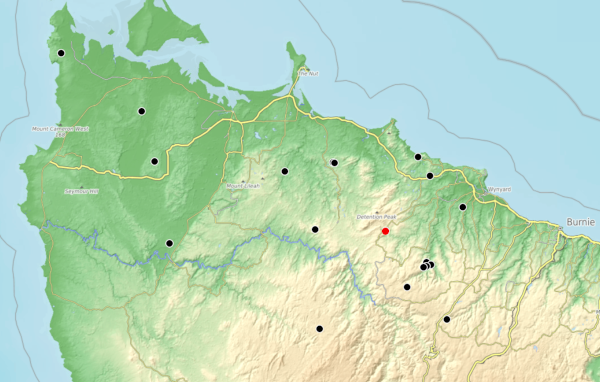
I collected 2 males and a probable female of M17 at the red dot on 2026-09-09
It's tiny and looks like many other thipsels:
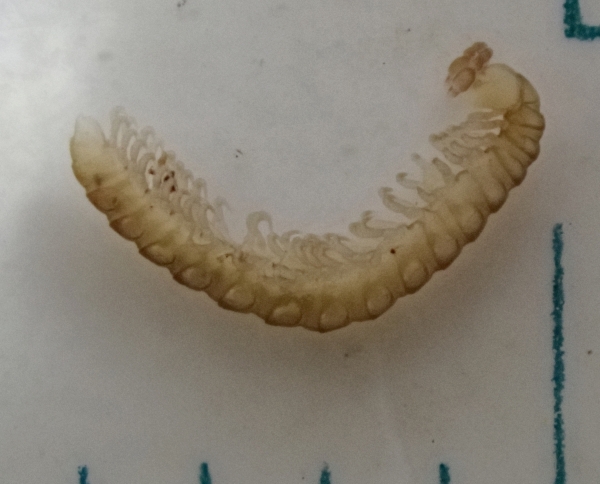
Freshly collected male; millimetre scale
The miniscule gonopods are unusual in the Tasmanian Dalodesmidae fauna because the posterior surface is smooth and boring. The arms at the top are turned towards the head and the mid-height processes are on the anterior surface. There's some minor variation across the M17 species range, too. In some populations the gonopod has a bump on the posterior surface, kinking the top of the gonopod down towards the head. I haven't carefully reviewed all the previously collected M17 specimens (32 males), which are housed in QVMAG. The two new males are being deposited in TMAG.
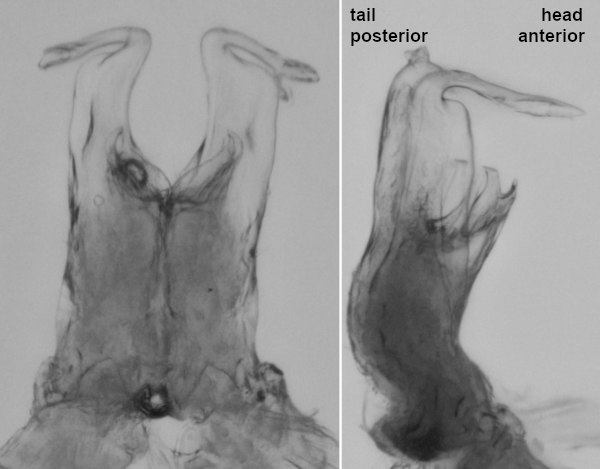
Anterior view of gonopods (left); left lateral view of gonopods (right)
The latest specimens were in leaf litter accumulated in a thin layer on top of a fallen log. That's not usually a high-yielding microhabitat for millipedes in Tasmania. In Gippsland (Victoria) it's a profitable substrate to search in forests where lyrebirds have scratched up the ground litter, and the same may be true in southern Tasmanian forests infested with introduced lyrebirds.
2026-09-10